

Bintan tourism
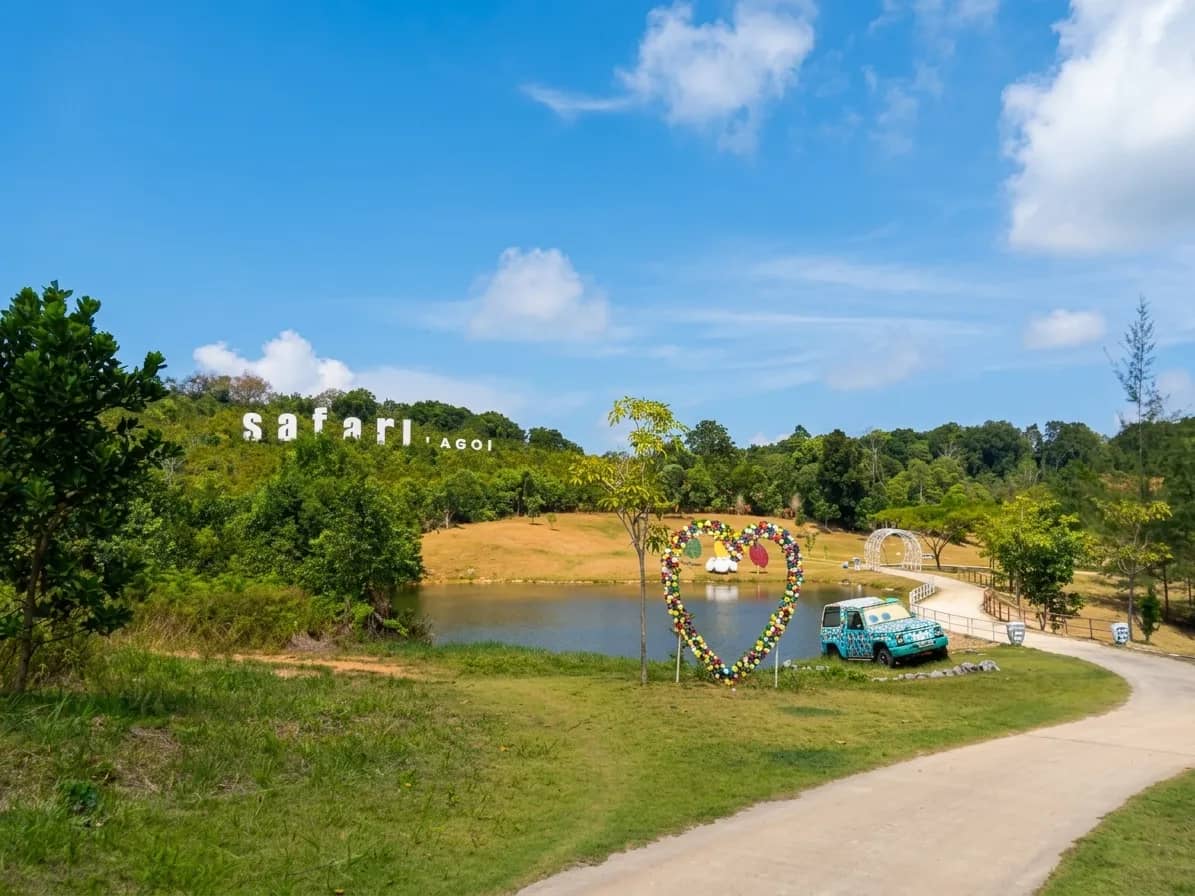
Safari Lagoi Bintan: What Is Inside and the Best Time to Visit
It is called a safari, but you do not drive past the animals — this is a wildlife park you explore on foot, plus a tropical farm included in the same ticket. The one thing that most often spoils a visit: the counter stops issuing tickets an hour before the gate closes.
What to know before you head to Safari Lagoi
Safari Lagoi Bintan is in Kota Baru, Teluk Sebong district — the same district as the Lagoi resort area, which makes it one of the closest attractions to where most guests stay. It combines two things in one ticket: a wildlife conservation area and the Eco Farm, a tropical farm next door.
The word safari in its name is often misunderstood. You do not drive past free-roaming animals as you would at the big safari parks in Java: the animals are kept in separate enclosures and areas, and you walk between them. Most visitors are done in one to one and a half hours. What makes it worthwhile for families is not its size, but how close children can get to the animals and how many of them can be fed by hand.
The collection focuses heavily on Indonesian endemic species — Sumatran tigers, sun bears, orangutans, Komodo dragons, estuarine crocodiles and Sumatran elephants — which is also why the park calls itself a conservation institution. Visitor reviews are divided over the condition of some of the animals, especially the elephants. This page mentions it because that is what the public reviews say, not to pass judgement: it is up to you to decide whether it matters to you before you buy a ticket.
Location, hours and visit length
The figures people usually look for first: where it is, how late you can still get in, how long you will spend inside, and how long the journey takes from where you are staying.
Driving time
15 minutes from Lagoi
60 minutes from Tanjung Pinang
Opening hours
08:00–16:30, daily
The counter stops issuing tickets at 15:30 — an hour before the gate closes. Arriving after that means you cannot get in at all, not just a shorter visit.
Visit length
60–90 minutes
The whole area is explored on foot. Groups with young children usually take longer because they stop at the enclosures where the animals can be fed.
District
Teluk Sebong
Address: Kota Baru, Teluk Sebong, Kabupaten Bintan, Kepulauan Riau 29152
Open in Google Maps
Safe times to set off
Unlike the sand dunes, heat is not the deciding factor here — most of the route is shaded by trees. What matters is the ticket cut-off, and what time the animals are still active.
Best window
8am – 11am
The animals are at their most active, feeding times generally fall in this window, and the air is still cool. It is also the quietest time: resort guests usually only head out after lunch. If you are coming with children, this is the time to choose.
Too late
After 3.30pm
The counter stops issuing tickets at 3.30pm even though the gate does not close until 4.30pm, so arriving at four means you will not get in at all. Even arriving at three makes for a rushed visit. If your afternoon is already taken, it is better to move it to another day than to force it.
What is inside
Not ranked best to worst, but in walking order: the enclosures you can only view from outside, then the areas where you can touch and feed the animals, then the farmland included in the same ticket.
Large animal enclosures
Sumatran tigers, sun bears and orangutans
The most visited section, and the only one that can truly only be viewed from behind a fence. Sumatran tigers, sun bears and orangutans live in separate enclosures along the main route. The best time to see them is in the morning — by late morning most of the animals have moved into the shade and cannot be seen from the path at all. The guides can usually tell you the feeding schedule if you ask at the entrance.
Suits: All visitors, best in the morning
Komodo dragons and estuarine crocodiles
Two animals that fascinate precisely because they keep still
Komodo dragons and large estuarine crocodiles are kept in open fenced enclosures that you can view up close. Both barely move all day, and that is exactly what keeps children standing here so long — their size only sinks in when you stop and watch. The fence is low in places, so keep hold of young children.
Suits: Children and adults; watch young children at the fence
Walk-in aviary
Walk inside, rather than looking in from outside
A large enclosure that visitors can walk into, housing Indonesian birds including the Bali myna, cockatoos, parrots and peacocks, with ostriches in a separate area nearby. It is the most popular spot for photos because the birds are at eye level with no bars in the way. Bird feed is sold near the entrance and is usually the children's favourite part.
Suits: Families with children; photos
Feeding area
Rabbits, deer, ponies and tortoises
Several low pens where tame animals can be touched and fed by hand: rabbits, deer, ponies and tortoises. This is where family groups linger longest, and the main reason a visit can run past an hour and a half. Feed is sold on site in small containers. Bring wet wipes — not every spot has a hand-washing station.
Suits: Young children; the part toddlers love most
Sumatran elephants
Paid interactions, separate from the entry ticket
The Sumatran elephants here are offered as paid interactions: feeding, photos and, at certain times, rides, all charged separately from the entry ticket. It should be said plainly that this is the section with the most divided reviews — some visitors have written about their concerns over the elephants' condition and the way they are tethered. If that matters to you, you can skip this section without it affecting the rest of your visit.
Suits: A personal choice; interactions charged separately
Eco Farm
Tropical farmland on the same ticket
Farmland beside the park, included in the same ticket: rice, corn, peanuts, papaya, bananas and dragon fruit, plus patches of sunflowers and lavender planted especially for photos. This is the most exposed and hottest section, so save it for last if you come in the morning. What is growing changes through the year — out of season, some of the patches are bare.
Suits: Photos and educational school visits
The address, hours, ticket cut-off and visit length were compiled in September 2026 from the park's Google Maps listing, Kompas Travel's coverage of its hours and prices, and the operator's ticket page. The driving times are Google Maps estimates from the Lagoi area and from Tanjung Pinang, not measured journeys. This page does not list ticket prices: rates are tiered — Riau Islands ID card, other provinces, foreign passport, and packages that include the paid interactions — and each tier changes, so a wrong figure does you more harm than no figure at all. Animal numbers are not listed either, because the animals in the enclosures change and this page cannot keep up.
What to prepare before you go
Leave early, and count back from 3.30pm
That is the ticket cut-off, not the closing time. With a visit of one to one and a half hours, leaving Lagoi by 2pm at the latest is still safe — but the morning is still better because the animals are much more active.
Closed shoes, not flip-flops
The whole area is explored on foot and some of the paths are dirt that turns muddy after rain. Bring insect repellent too: the shaded sections and the eco farm side have plenty of mosquitoes all year round.
Bring cash for extras the ticket does not cover
The entry ticket covers the main route and most of the enclosures, but elephant interactions, extra animal feed and buggy hire are charged separately on site. Bring small notes and do not rely on paying by card.
Combine it with other spots in Teluk Sebong
As it is in the same district as the resorts, it works well as a morning activity followed by an afternoon mangrove tour on Sungai Sebung or lunch at Lagoi Bay. One day is enough for both without rushing.
We will drive you there and wait until you are done
Tell us your date, group size and pick-up point. We will prepare the car and a driver who knows the way into Kota Baru — including an early start so you get in well before the counter closes, and combining it with another stop in Teluk Sebong in a single route.